How to Choose a Boutique Luxury Condo in Toronto: A 2027 Guide
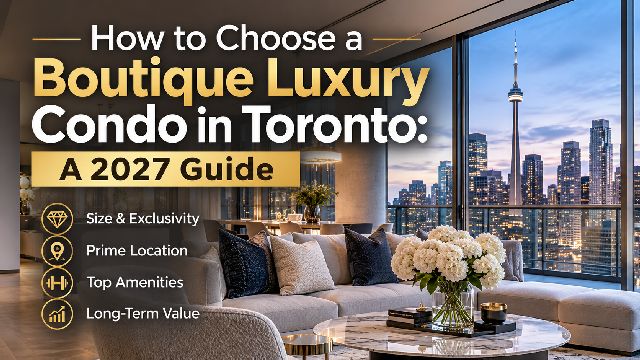
Quick Answer: How Do You Choose a Boutique Luxury Condo in Toronto?
Shortlist low-rise or small-tower buildings (typically under 100 suites) in a micro-neighbourhood you would genuinely live in. Then verify seven things: location, developer or board track record, financial health (status certificate and reserve fund), suite layout, true monthly costs, amenities you will use, and resale demand for that exact floor plan. In 2027's buyer-friendly condo market, you also have leverage on price, deposit terms and closing flexibility.
What Is a Boutique Luxury Condo in Toronto?
There is no official definition, but in practice a boutique luxury condo is a small, design-led building with a limited number of suites, usually low-rise or mid-rise, with high-end finishes, generous suite sizes and a service-focused feel.
Toronto examples show the scale. 50 Scollard in south Forest Hill is described by its developer as an intimate collection of 15 residences, while 10 Prince Arthur in the Annex and Yorkville area has 25 residences across seven storeys. Compare that with a typical downtown tower of 400 or more units, and the difference in density, privacy and neighbour-to-neighbour experience is obvious.
Why 2027 Is a Different Market for Luxury Condo Buyers
The broader Toronto condo market has been in a correction. TRREB data showed the average GTA condo apartment sold for $605,257 in September 2026, down 7.7% from a year earlier. Investor-driven, small-unit condos have taken most of the pressure.
The luxury and boutique end has behaved differently. Zonda found that of nine condo projects launched in the Greater Toronto and Hamilton Area in 2025, five were priced in the luxury category at $1,800 or more per square foot. Developers entering the segment, such as Equiton with its six-storey Bridleview Residences at 2535 Bayview Avenue, expect the market to shift from investor products toward boutique, livable homes built for owner-occupiers.
What this means for you: Mainstream condo supply is soft, which gives buyers negotiating room, but the best boutique suites in the best locations are scarce. Expect to be selective, not rushed. Market conditions change, so confirm current figures with your broker before you make an offer.
The 7-Step Checklist for Choosing a Boutique Luxury Condo
1. Choose the micro-neighbourhood first
In luxury real estate, the street matters as much as the building. Decide how you want to live: walking to Bloor Street shopping and restaurants in Yorkville, quiet tree-lined streets in Forest Hill, or proximity to ravines, golf and private schools around York Mills and the Bridle Path. Visit at different times of day to test noise, traffic and parking.
2. Study the building size and suite mix
Smaller buildings feel more private, but a building with only 15 to 30 suites has fewer owners sharing costs. Ask how many suites are owner-occupied versus rented. A high owner-occupancy rate usually signals pride of ownership and fewer disputes.
3. Research the developer, builder and architect
For new boutique projects, a developer's delivery record is your best protection. Check completed buildings, construction quality, on-time closings and how deficiencies were handled. In Ontario, you can look up builders and vendors through the Home Construction Regulatory Authority (HCRA) and confirm warranty enrolment with Tarion. For resale buildings, review the property manager's reputation and the board's meeting minutes.
4. Judge the suite, not the brochure
Luxury is in the details. Check these in person:
- Ceiling height and floor-to-ceiling glazing
- Layout efficiency: usable square footage, not just a large total
- Natural light by exposure, and what will be built next door
- Kitchen appliance quality, millwork and storage
- Outdoor space: terrace or balcony depth, gas line and privacy
- Parking, locker and EV charging included in the price
5. Prioritize amenities you will actually use
Small buildings often skip the pool and party room and invest in what residents use daily: a 24-hour concierge, valet, secure parking, a quiet lounge, and a well-equipped fitness room. Fewer amenities usually means lower maintenance fees and fewer things that can fail.
6. Review the financial health of the corporation
This step separates smart buyers from regretful ones. On a resale purchase, your lawyer should review the status certificate and the reserve fund study. Ontario condominiums are required to commission reserve fund studies at regular intervals, so look for:
- A well-funded reserve fund relative to the projected repairs
- A history of special assessments, and any pending litigation
- Recent or upcoming major repairs (elevators, garage membrane, windows)
- Realistic maintenance fee increases over time
In a small building, one large repair is split among fewer owners, so a thin reserve fund matters more.
7. Test the resale and rental demand
Even if you plan to stay for a decade, you should know your exit. Compare recent sales of similar suites in the same building and nearby, days on market, and how far sold prices landed from asking. Boutique buyers are a smaller pool, so unusual layouts or lower floors facing a wall can take longer to sell.
Boutique vs. Large Luxury Tower: Quick Comparison
Factor | Boutique building | Large luxury tower |
|---|
Typical size | Under about 100 suites | 200 to 600+ suites |
Privacy | High, few neighbours per floor | Moderate, more shared traffic |
Amenities | Focused, service-oriented | Extensive, many shared spaces |
Maintenance fees | Depend on size and services | Costs spread across more owners |
Suite size | Often larger, more custom | Wider range, more standard plans |
Resale pool | Smaller, specific buyers | Broader, more comparable sales |
Reserve fund risk | One repair weighs more per owner | Usually more diluted |
New Construction vs. Resale Boutique Condos
New construction gives you modern systems, current design and a new-home warranty, but closing dates can shift and you pay for the finishes and the promise. Ontario updated its delayed closing and occupancy warranty rules in August 2026, including a revised New Condominium Home Addendum, so make sure your lawyer reviews the current forms. The Tarion purchase-registration requirement introduced in 2026 applies to new freehold homes, not condo units.
Resale boutique condos let you see exactly what you are buying, including the building's real operating costs, and are often found in established neighbourhoods where new land is scarce. The trade-off is that older buildings may need major repairs, so a thorough status certificate review is essential.
Neighbourhoods to Consider
- Yorkville and the Annex: Walkable luxury, high-end retail and dining, and some of the city's most recognized boutique and designer addresses.
- Forest Hill and Rosedale: Quiet, established streets, private schools and smaller buildings.
- York Mills, Hoggs Hollow and the Bridle Path: Larger suites aimed at downsizers selling a house, close to ravines, golf and the 401 and 404.
- Bayview Village and Willowdale: Strong transit, shopping and top-ranked schools, with boutique options often priced below the downtown core.
What Does It Really Cost?
Look beyond the list price. Budget for the Ontario land transfer tax and the additional Toronto municipal land transfer tax, legal fees, monthly maintenance fees (often quoted per square foot), property tax, insurance, utilities and parking. On new builds, also ask about HST treatment, development charges and closing adjustments. Ask your broker for a full cost sheet before you submit an offer.
Red Flags to Watch For
- A reserve fund that looks small compared with the building's age and size
- Frequent or large special assessments
- Maintenance fees that look unrealistically low on a new project
- Pressure to waive conditions or skip the status certificate review
- A developer with no completed projects or a history of delayed closings
- Poor sound insulation or heavy mechanical noise from neighbouring suites
Frequently Asked Questions
What makes a condo "boutique" in Toronto?
A boutique condo is a small, design-focused building, generally under about 100 suites, with higher-end finishes, larger suites and a more personal level of service than a mass-market tower. There is no legal definition, so always check the actual unit count.
Is 2027 a good time to buy a luxury condo in Toronto?
It can be, if you are buying to live in the home for years. The broader condo market has softened, which strengthens buyer negotiating power, while well-located boutique suites remain limited. Your decision should rest on your time horizon, financing and the specific building, not on market timing.
How much does a boutique luxury condo cost in Toronto?
Prices vary widely by neighbourhood, size and finish level. Industry data shows luxury new-build projects launching at around $1,800 or more per square foot, and prime locations can exceed that. Ask your broker for recent comparable sales in the specific building.
What should I check before buying a resale condo?
Have your lawyer review the status certificate, the reserve fund study, recent board minutes, insurance details and any history of special assessments or litigation before your conditions expire.
Are boutique condos better investments than large towers?
Not automatically. They can hold value well when the location, design and scarcity are strong, but the smaller buyer pool can mean longer sale times. Evaluate each building on its own numbers.
Do I need a real estate broker to buy a boutique condo?
You are not required to use one, but many boutique suites sell privately or through limited marketing, and an experienced broker can help you find them, interpret building documents and negotiate terms.
Work With a Toronto Luxury Condo Specialist
Navid Sharifzadeh is a Toronto real estate broker with RE/MAX Realtron Barry Cohen Homes Inc., serving North York, Bayview Village, Willowdale, York Mills, Richmond Hill, Vaughan, Thornhill and the surrounding areas. For a private consultation on boutique and luxury condos, call [phone number] or visit navidsharifzadeh.com. Office: 685 Sheppard Ave E, Suite 401, North York, ON.
This guide is general information, not legal, tax or financial advice. Market figures were current at the time of writing; confirm with a licensed professional before making a decision.
.png)