How to Price a Condo in Toronto (2026 Guide for Maximum Value)
Pricing a condo correctly in a competitive and constantly evolving market like Toronto is one of the most critical decisions you’ll make as a seller. Price it too high, and your listing may sit stale for weeks. Price it too low, and you risk leaving tens of thousands of dollars on the table.
In high-density areas like North York, Willowdale, and the Yonge corridor, pricing strategy is even more sensitive due to strong competition and data transparency.
This comprehensive guide will walk you through exactly how to price your condo in Toronto to attract buyers, generate offers, and maximize your final sale price.
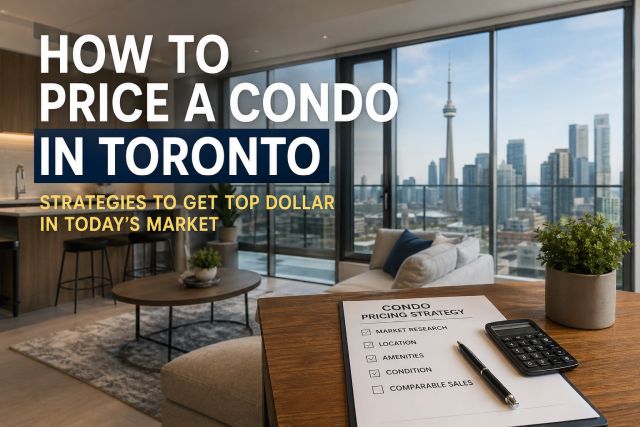
🧠 Why Pricing Strategy Matters More for Condos
Unlike detached homes, condos are:
- Highly comparable (same building, similar layouts)
- Data-driven (buyers see recent sales instantly)
- Price-sensitive (small differences affect demand)
👉 Buyers in Toronto condo markets often compare:
- Same building units
- Same floor plans
- Recent sales within 30–60 days
This means your pricing must be strategic, not emotional.
📊 Step 1: Analyze Comparable Sales (The Foundation)
The most important factor in pricing your condo is comparable sales (“comps”).
What to look for:
- Units sold in the last 30–90 days
- Same building (best case)
- Similar:
- Size (sqft)
- Layout (1 bed, 1+den, 2 bed)
- Floor level
- Exposure (south, west, etc.)
- Renovation level
Example:
If 3 similar units in your building sold for:
- $610,000
- $625,000
- $635,000
👉 Your realistic price range is:
$615,000 – $640,000
💡 Pro Tip:
In areas like Willowdale:
- Buildings like Gibson, Ultima, and Pulse have tight pricing bands
- Even a $10K difference can impact buyer interest
🏢 Step 2: Adjust for Building-Specific Factors
Not all condos are equal—even in the same area.
Key building factors:
- Maintenance fees (high fees = lower price)
- Amenities (pool, gym, concierge)
- Age of building
- Reputation (well-managed vs problematic)
- Reserve fund health
Example:
Two identical units:
- One with $0.65/sqft maintenance fees
- One with $0.90/sqft
👉 The lower fee unit will sell for more
🏠 Step 3: Evaluate Your Unit’s Unique Features
After comparing comps, adjust for your specific unit.
Value-boosting features:
- Renovated kitchen/bathroom
- Parking (huge in North York)
- Locker
- Clear view (no obstruction)
- High floor
- Balcony size
Value-reducing factors:
- Facing highway / noise
- Low floor
- Poor layout
- Outdated finishes
- Tenant-occupied condition
💡 Example Adjustment:
If average sale = $630,000
- Renovated unit: +$10K–$25K
- No parking: -$20K–$40K
👉 Final price target adjusts accordingly
📉 Step 4: Understand Current Market Conditions
Pricing is not static—it depends on market trends.
In a Seller’s Market:
- Low inventory
- High demand
👉 Strategy:
- Price slightly below market
- Encourage multiple offers
In a Buyer’s Market:
- High inventory
- Slower sales
👉 Strategy:
- Price at or slightly below market value
- Avoid overpricing (critical)
📍 Toronto Condo Trend Insight:
Toronto’s condo market often shifts quickly depending on:
- Interest rates
- Investor activity
- Immigration trends
👉 You must price based on current conditions, not last year’s sales
🎯 Step 5: Choose the Right Pricing Strategy
There are 3 main strategies used in Toronto:
🔥 1. Underpricing Strategy (Most Effective)
Price below market value to attract attention.
Example:
Market value: $650,000
List price: $599,900
👉 Goal:
- Generate multiple offers
- Drive price up through competition
✔ Best for:
- High-demand buildings
- Move-in ready condos
⚖️ 2. Market Value Pricing
List at fair market value.
Example:
Market value: $650,000
List price: $649,000
✔ Best for:
- Balanced market
- Unique units
🚫 3. Overpricing (Biggest Mistake)
List above market expecting negotiation.
Example:
Market value: $650,000
List price: $699,000
❌ Problem:
- Fewer showings
- Stale listing
- Price reductions later
👉 Often results in lower final sale price
📅 Step 6: Timing Your Price Strategy
The first 7–10 days on market are critical.
During this period:
- Your listing gets maximum exposure
- Buyers compare aggressively
- Agents bring serious clients
👉 If overpriced:
You lose momentum immediately
💡 Key Rule:
The market reacts fast—and remembers pricing mistakes
🧲 Step 7: Buyer Psychology (Very Important)
Toronto condo buyers are:
- Highly informed
- Data-driven
- Emotionally influenced by value
Pricing psychology tactics:
✔ Price under key thresholds:
- $599,900 instead of $605,000
- $699,000 instead of $705,000
👉 This increases visibility in search filters
✔ Create urgency:
- Offer date strategy
- Competitive pricing
👉 Buyers fear missing out → stronger offers
📸 Step 8: Support Your Price with Marketing
Even the best price won’t work without exposure.
Must-have marketing:
- Professional photography
- Video walkthrough
- MLS + Realtor.ca exposure
- Social media ads
💡 In Toronto:
Listings with strong marketing often sell for:
👉 2–5% higher
⚠️ Common Pricing Mistakes to Avoid
❌ 1. Pricing based on emotion
Your condo’s value = market value, not personal attachment
❌ 2. Ignoring recent sales
Even sales from 3 months ago may be outdated
❌ 3. Overestimating upgrades
Not all renovations add equal value
❌ 4. “Testing the market”
Overpricing first → reducing later = weak strategy
📈 Advanced Strategy (Used by Top Agents)
The “Strategic Underpricing + Offer Night” Method
- List below market value
- Market aggressively for 7 days
- Set offer date
- Create competition
👉 This often results in:
- Multiple offers
- Higher final price
- Faster sale
🧾 Real Example (North York Condo)
- Estimated value: $680,000
- Listed at: $649,000
- 8 offers
- Sold at: $725,000
👉 This strategy works extremely well in strong buildings
🧭 Final Pricing Checklist
Before listing your condo, confirm:
✔ Reviewed last 30–60 day sales
✔ Adjusted for unit features
✔ Evaluated building factors
✔ Considered market conditions
✔ Selected correct pricing strategy
✔ Planned marketing approach
🏁 Final Thoughts
Pricing a condo in Toronto is both a science and an art. The data gives you the range, but strategy determines your final result.
In competitive areas like North York and Willowdale, success comes down to:
- Precision pricing
- Strong presentation
- Smart marketing
👉 The right pricing strategy can mean the difference between:
- A slow sale with price cuts
- Or a fast sale at top dollar
🚀 Expert Tip
If you want to maximize your condo sale price:
👉 Focus less on “how high you list”
👉 Focus more on how the market reacts in the first 7 days
If you’re wondering how much your Toronto condo is worth contact Navid Sharifzadeh at 647-300-1010
.png)